 Business License

Difference between laminating and laminating nonwoven fabric process
Difference between laminating and laminating nonwoven fabric process
Nonwoven fabrics in the production of no other attached processing technology, in order to product the diversity of materials required and special features, will be nonwoven raw materials to do a special process.
According to the different processing mode produces different technology, the final effect is also different.
Laminating and laminating are the more common processing techniques for nonwoven fabrics, the purpose of which is to make the nonwoven fabrics waterproof.
01Production process
Coated Nonwoven Fabric
It is a composite material that is coated with emulsion adhesive on the surface of the nonwoven embryo, and then after drying, high temperature treatment, cooling and other processes, the nonwoven embryo coated with adhesive and the polyethylene film are laminated together, so as to strengthen its waterproof, anti-pollution performance and tensile strength.
Laminating Nonwoven Fabric
It is to use professional machine to heat the plastic rice into liquid, and then through the machine to pour these plastic liquids on one side or both sides of the nonwoven fabrics, there is a drying system on one side of the machine, which is able to dry and cool this layer of poured plastic liquids quickly, and finally produce the film-laminated nonwoven fabrics. It plays the role of strengthening, thickening, moisture-proof, water-proof, anti-oxidation and so on.
The difference between nonwoven lamination and lamination lies in the different production technology and raw materials, the appearance of the finished product and the role of the same basic principles.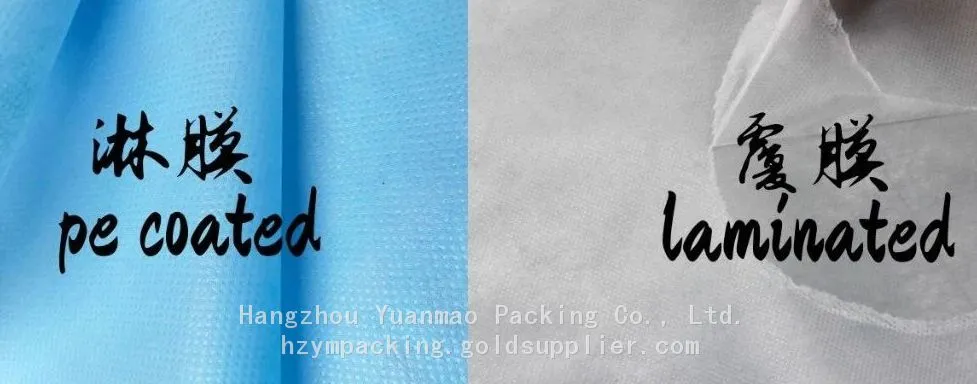
02 The difference between lamination and lamination
1. Production process
Laminating nonwoven fabrics by the production of pe laminating film and nonwoven fabrics in the high temperature equipment composite production.
Lamination nonwoven fabrics use the equipment to melt the plastic and spray on the surface of nonwoven fabrics, the advantage is the production speed and low cost.
2. color and appearance
Laminating nonwoven fabric is finished composite, smoothness and color are better than laminating nonwoven fabric.
Laminating nonwoven fabric has obvious small holes from the surface due to one-time molding of film and nonwoven fabric.
3. Aging speed
The pe laminating film used for film-laminated nonwoven fabric has added anti-aging agent before production, so the anti-aging effect is better than that of film-laminated nonwoven fabric.
Laminating nonwoven fabric production, plastic dissolution after adding anti-aging agent technology cost is too high, generally used laminating nonwoven fabric seldom add aging agent, aging speed in the sun.
4. Physical properties
Lamination nonwoven fabrics have better waterproof performance, tensile strength and scratch resistance, but due to the presence of the overlay film, its permeability is relatively poor.
Lamination nonwoven fabrics also have better waterproof performance and tensile strength, and at the same time have better air permeability and softness, and are easier to be processed into various shapes.
5. Thickness
Lamination is thicker, with a thickness of 25-50 microns.
Laminating films are relatively thin, generally between 5-20 microns thick.
In general, although both belong to nonwoven fabrics, due to the difference in their manufacturing process and physical properties, there are some differences between laminated nonwoven fabrics and laminating nonwoven fabrics in the field of application.
03Common film materials
Common film materials are: 1. Polyethylene (PE): polyethylene is a commonly used film material, it has good transparency, flexibility and waterproof performance. Polyethylene film is usually used in food packaging, pharmaceutical packaging, etc. 2. Polypropylene (PP): Polypropylene is another common film material, which has high strength, water resistance and barrier properties. Polypropylene film is usually used in tobacco packaging, stationery packaging and other fields.
3. Polyester (PET): Polyester is a synthetic resin that is resistant to high temperature and abrasion, and it can be used as the film layer material for lamination paper. Polyester film has excellent mechanical and optical properties, commonly used in electronic product packaging, labeling and other fields.
4. Nano-composite film: By adding nano-materials (such as zinc oxide nanoparticles, silicon dioxide, etc.) to traditional film materials, the physical properties of the film can be improved, such as enhanced barrier, antioxidant and antimicrobial properties, to improve the quality of packaging.
Secondly, there are some other materials: polyvinyl chloride (PVC), bi-oriented polypropylene film (BOPP), PEVA film, aluminized film, frosted film and so on.
04Packaging Applications
Laminating nonwoven fabrics have gradually entered the packaging industry since 2011 as a new type of environmentally friendly packaging materials, with various styles and exquisite workmanship, the products are sold well all over the country and the world, and the manufacturers are mainly in Guangzhou and Wenzhou.
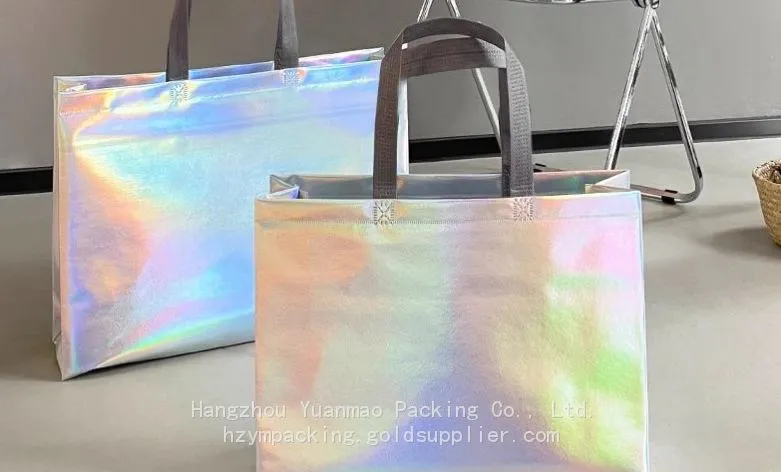
Laminating nonwoven fabrics are widely used in packaging, decoration and decorative industries, such as shopping bags, shoe bags, storage products, home textiles, jewelry, cigarettes, wine, tea, and other high-level gift packaging environmental protection materials.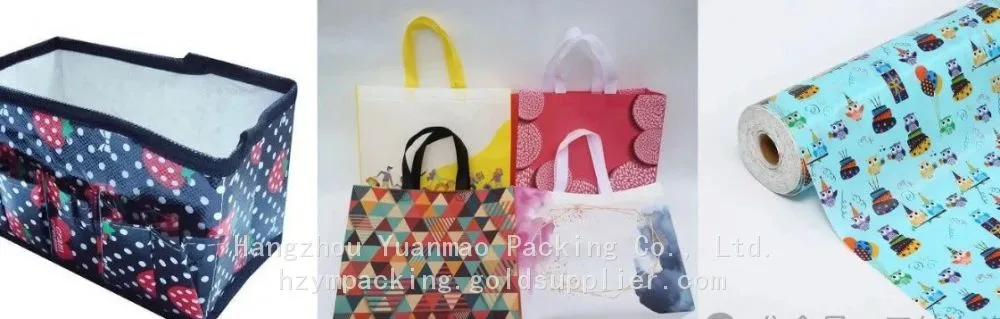
The products are in various colors, bright and fashionable! It is a perfect substitute for traditional PU products with better cost performance!
Laminating embossed nonwoven fabrics currently on the market dozens of patterns, chevron / bark pattern / small hole pattern / pinhole pattern / beige pattern / mouse pattern / brushed pattern / crocodile pattern / stripe pattern / mouth pattern / dot pattern / cross pattern and so on.
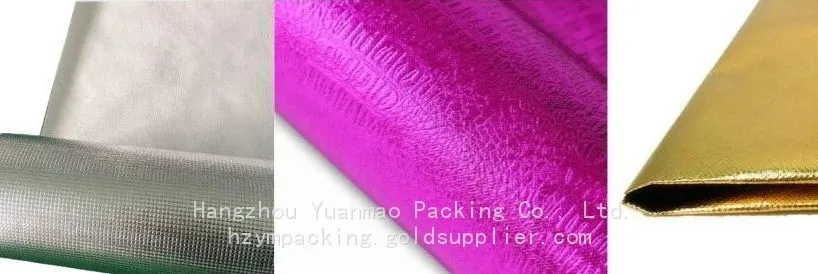
Laser nonwoven fabric has bright color, high-grade texture, and is popular in the market! Currently widely used in home textiles, tobacco, alcohol, cosmetics, environmental protection bags, brand-name apparel, jewelry, gifts, albums, decorative items and other key packaging materials industry.
05Medical and health care applications
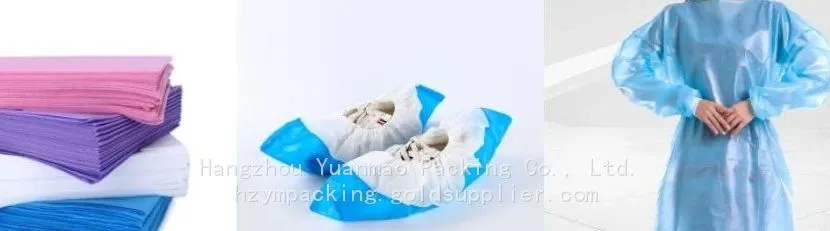
Laminating nonwoven fabrics because of its breathability, softness than the laminated nonwoven fabrics, widely used in medical and health supplies industry, common products are disposable isolation clothing, bed sheets, covers, hole towels, shoe covers, toilet covers and so on.
Composite PE breathable film is commonly used in protective clothing, pet pads, breast pads, surgical postpartum pads, medical sheets, diapers, personal care products.
Manufacturers are mainly concentrated in Shandong, Zhejiang, Jiangsu, Guangdong, Hubei, Fujian and other places.
06Composite Nonwoven Fabric Performance
Laminating nonwoven fabric, laminating nonwoven fabric, laser nonwoven fabric, high-gloss nonwoven fabric, matte nonwoven fabric, are composite process, most of them are composite two-layer fabric.
PE lamination nonwoven fabrics can be compounded in many ways for nonwoven fabrics and other fabrics, such as lamination treatment, hot pressing treatment, spray adhesive treatment, ultrasonic treatment, etc., through the compounding process can be two or more layers of material compounded together.
The high quality performance of composite nonwoven fabric is the best choice for industrial nonwoven fabric:
1. Superior abrasion resistance and barrier property;
2. non-toxic, anti-bacterial and corrosion resistance;
3. good air permeability and waterproof performance;
4. high level of tensile and tear strength and good uniformity;
5. excellent processing performance and thermal stability;
6. no need for dyeing, more environmentally friendly and higher color fastness.
Disclaimer: The content is based on the network information, the purpose is to convey more information and sharing, and does not imply endorsement of its views or confirm its authenticity, and does not constitute other recommendations. It only provides a platform for communication and is not responsible for its copyright. If it involves copyright infringement, please contact us for timely modification or deletion
Recently Posted
-
Paper price hike. India's multi-region carton mills collectively increased prices by 15%
October 15, 2024Paper price hike. India's multi-region carton mills collectively increased prices by 15% Recently, India's Kerala Co Read More
 -
Paper price hike. India's multi-region carton mills collectively increased prices by 15%
October 15, 2024Paper price hike. India's multi-region carton mills collectively increased prices by 15% Recently, India's Kerala Corrugated Box Manufacturers Association (KeCBMA) issued a notice announcing that due to the sharp rise in raw material costs, the price of corrugated cartons will be increased by 15%. The main reason for this price hike is the soaring price of kraft paper. The price of kraft paper, the main raw mateRead More -
Comparison of corrugated kraft paper: choosing the most suitable packaging material
October 11, 2024Common 20 kinds of plastic packaging materials use 1、Low density polyethylene (LDPE, LLDPE)Polyethylene is white waxy solid, Read More
 -
Packaging Testing Instruments and Equipment Expert Seminar Successfully Held in Jinan
October 10, 2024Packaging Testing Instruments and Equipment Expert Evaluation and Recommendation Seminar Successfully Held in Jinan In order Read More

Contact Us
Recommended Products
-
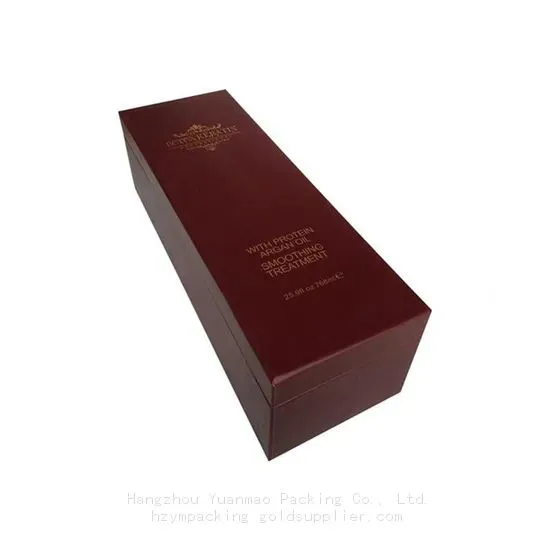
 Custom Logo Printed Paper Box Glass Packaging Wine Box PackageUS$ 1 - 3MOQ: 1000 Pieces
 -
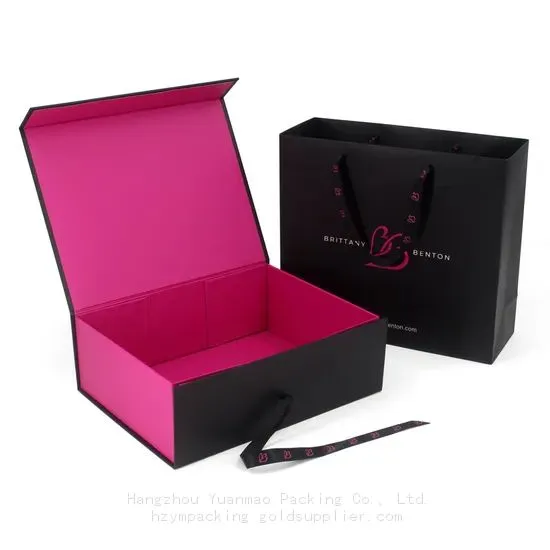
Wholesale Gift Boxes for Present Custom Magnetic Luxury Gift Box Packaging for Christmas Wedding Valentine BirthdayUS$ 1 - 3MOQ: 1000 Pieces
-
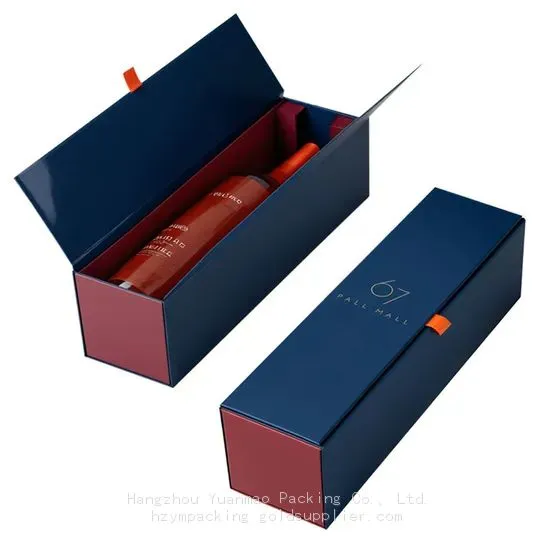
Custom Luxury Red Wine Paper Cardboard Magnetic Bottle Packaging Gift Wine BoxesUS$ 1 - 3MOQ: 1000 Pieces
-
Silver Card Radiant White Cardboard Box Cosmetic Packaging Box Folding Mask Box Perfume Box Printing Color Box IntroductionUS$ 0.01 - 0.99MOQ: 5000 Pieces
-
Customized Employee Birthday Greeting Cards Creative Corporate Business Thank You Invitations Premium Sense Christmas Wishes Small CardsUS$ 0.001 - 0.009MOQ: 50000 Pieces
-
Yanheng Custom Cardboard Gift Box for Biscuits PackagingUS$ 0.01 - 1.8MOQ: 1000 Pieces
-
Fashion Style Paper BoxUS$ 0.01 - 1.8MOQ: 10000 Pieces
-
Candy Box Gift Box Square Cardboard Box Gold Card Box Folding Gift Empty Box Products Wholesale Small BoxUS$ 0.01 - 0.09MOQ: 1000 Pieces
-
Customizable Packaging Box Paper Box Aromatherapy Gift Box Essential Oil Bottle Companion Gift Box Kraft Paper Cosmetic Jewelry Gift BoxesUS$ 0.99 - 1.8MOQ: 1000 Pieces
-
Valentines Flowers BoxUS$ 1.2 - 1.8MOQ: 1000 Pieces